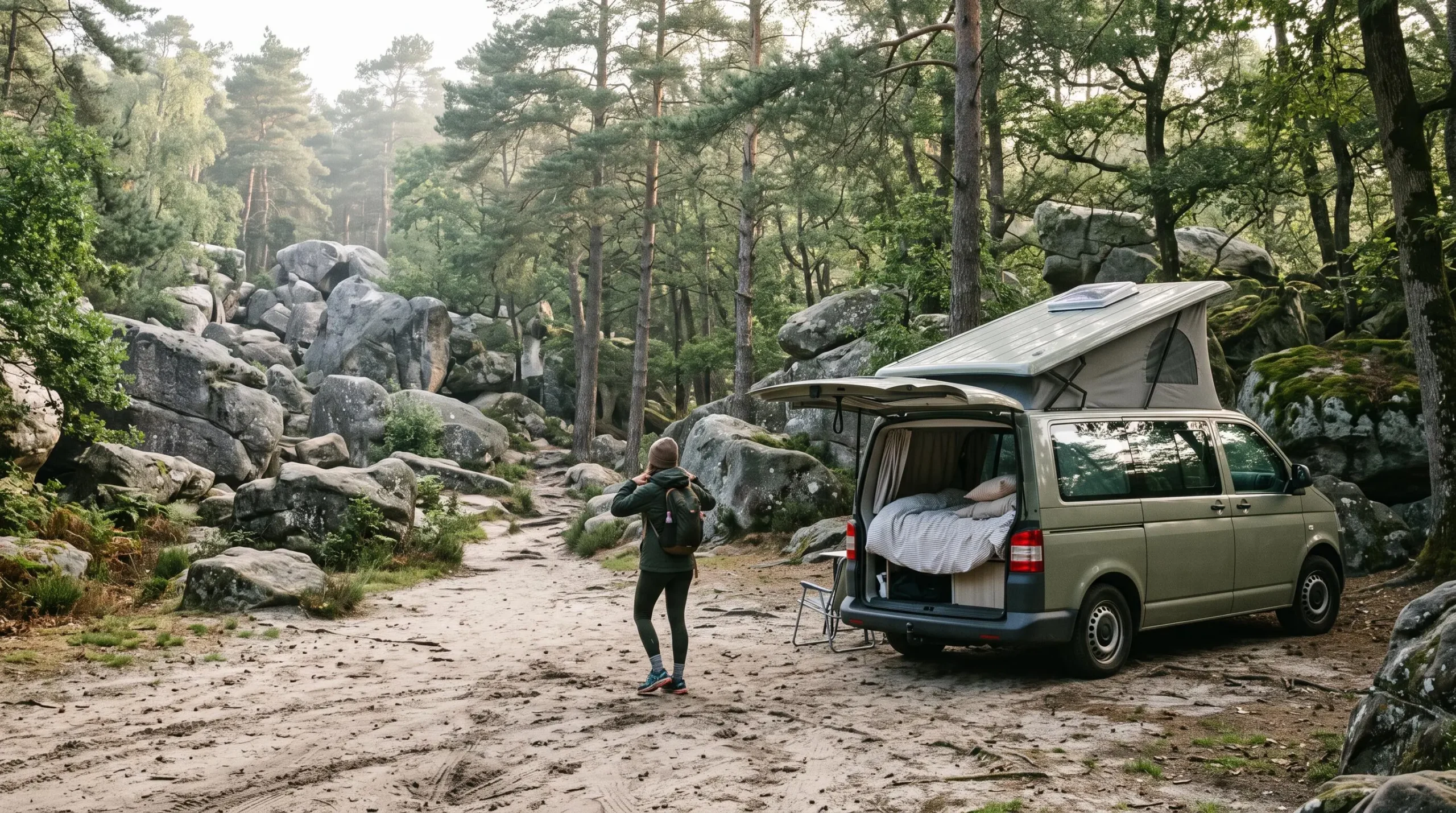
You step off your flight at Paris-Charles de Gaulle, baggage in hand, scanning the arrivals hall for the rental desk. The clock says you have three days before your next commitment. Instead of navigating Paris metro lines or hunting down a city hotel, you could collect a campervan, drive an hour southeast, and wake up tomorrow morning to the sight of pine trees and sandstone boulders in one of France’s most celebrated outdoor playgrounds. The Forest of Fontainebleau sits close enough to the airport that a short van trip turns a brief layover into a credible nature escape—if you know where to pick up the vehicle, where you’re allowed to park overnight, and how to structure the days in between.
This itinerary walks you through the entire loop: collecting your van at Roissy, reaching the forest edge by early afternoon, spreading hiking and bouldering across two full days, returning the vehicle on day three. Each step is grounded in verifiable logistics, official forest regulations and realistic drive times for travelers who may never have piloted a campervan before.
Why the Forest of Fontainebleau Makes the Perfect 3-Day Escape from Paris-CDG
Landing at an international airport typically marks the start of a complex transfer: taxi queues, metro maps, hotel check-ins. Fontainebleau reverses that rhythm. According to CDG to Fontainebleau driving distance data, the road distance from Paris-Charles de Gaulle Airport to the forest edge measures approximately 51 miles (82 kilometers), with an estimated drive time of around one hour to one hour fifteen minutes under normal conditions—though real-world traffic, particularly around Paris, can extend this to one hour thirty minutes. That proximity means you can bypass the capital entirely, trading airport concourses for gravel trails before lunchtime.
The forest itself unfolds across roughly 22,500 hectares of oak and pine, threaded with sandstone ridges that have made Fontainebleau a global reference for bouldering. Hikers follow color-coded circuits, climbers chalk their hands on the famous grès boulders, and visitors who prefer cultural landmarks can tour the Château de Fontainebleau, a UNESCO World Heritage Site that served French royalty for centuries. The Office national des forêts (ONF) manages the entire massif, maintaining trails, posting closure notices and enforcing regulations designed to protect both the forest ecosystem and visitor safety.
As of August 22, 2026, approximately 80 percent of the Fontainebleau Forest has reopened to the public following a major wildfire in July 2026 that burned around 2,000 hectares. Around 20 percent of the forest remains closed for safety reasons. Before any visit, travelers are advised to consult the Fontainebleau Forest official visitor updates published by the ONF and the Seine-et-Marne Prefecture, as closures and accessible areas are subject to ongoing changes.
For a traveler arriving with limited time, Fontainebleau delivers a rare combination: international-airport accessibility, authentic outdoor terrain and manageable scale. You won’t need to drive four hours south or book complicated ferry connections. Instead, a straightforward highway brings you to a landscape that feels leagues removed from the terminal you left behind.
Renting Your Campervan at Roissy: How to Hit the Road Without Entering Paris
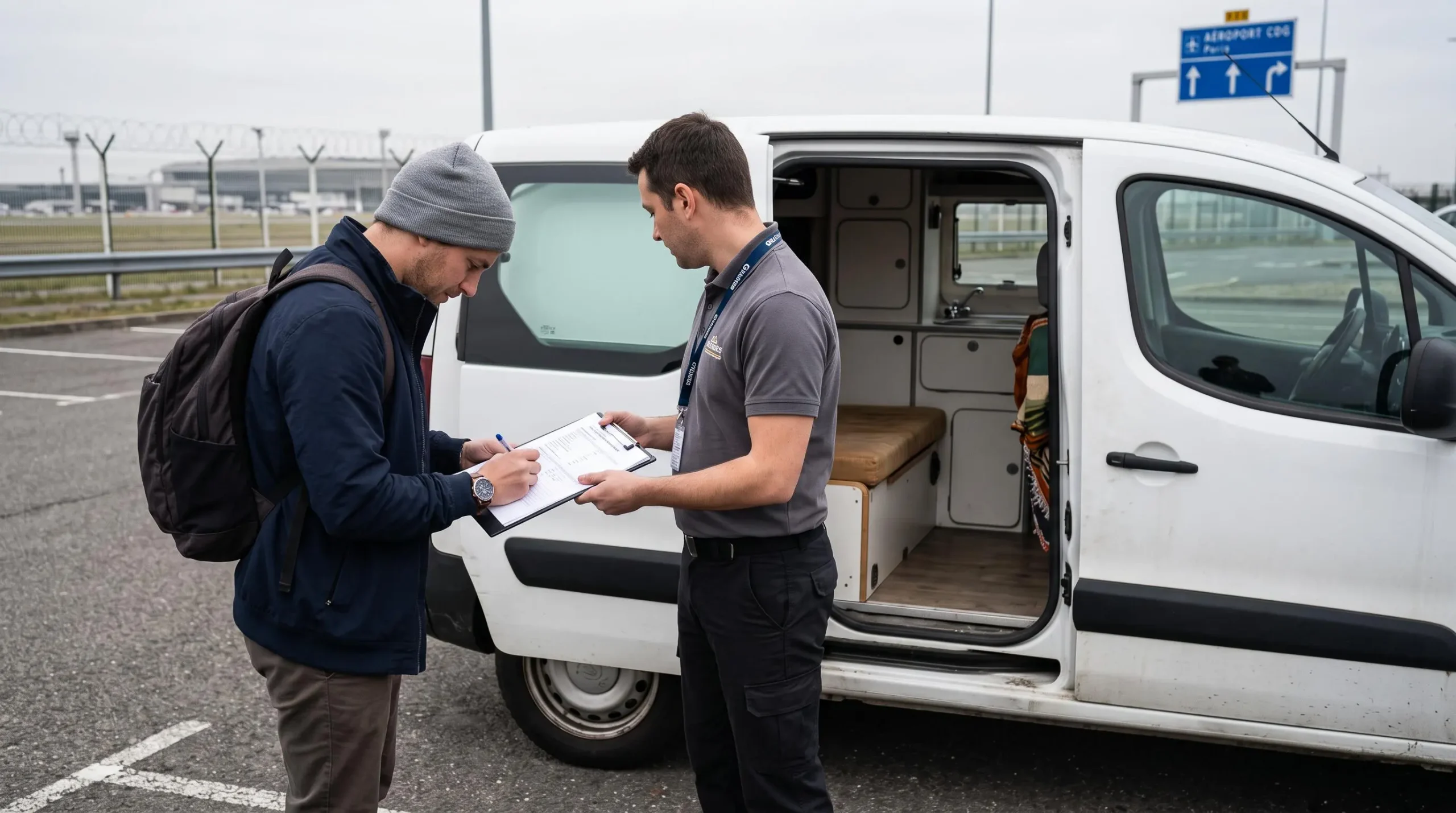
The mechanics of collecting a campervan at an airport matter more than most rental-car pickups, because the vehicle doubles as your accommodation. You will sleep, cook and store gear inside, so understanding the layout and equipment before you drive away prevents surprises on a forest car park at dusk. Campervan hire at Roissy is offered by WeVan, which positions vehicles near the airport perimeter, allowing renters to complete paperwork, load bags and depart without entering central Paris.
Choosing the right van starts with counting passengers and cargo. Compact two-seater models suit couples traveling light, with a rear bench that converts into a double bed, a small galley and minimal headroom. Family configurations add a pop-top or fixed high roof, offering standing height, extra sleeping berths and more cupboard space. If you plan to carry bicycles or a roof box for climbing gear, confirm that the rental includes a bike rack or roof-rail system; not every van arrives equipped for external loads.
Before you sign the handover sheet, walk the vehicle’s perimeter. Check tire condition, note any existing scratches on the bodywork, test the sliding door and rear hatch. Inside, locate the fresh-water tap, verify that the camping stove ignites, identify the leisure battery switch and confirm you understand how the bed conversion operates. Most first-time campervan drivers underestimate the vehicle’s height and width; ask the rental agent for exact dimensions, then practice a slow loop around the car park to build confidence before joining highway traffic.
Driving a campervan feels different from piloting a sedan: the extra height catches crosswinds, the extended wheelbase requires wider turns, and mirrors become critical for lane changes. Keep speeds moderate, especially on the initial stretch away from the airport, and allow extra braking distance. Once you grow accustomed to the sight lines, the handling becomes intuitive—most modern campervans are built on standard commercial van chassis that many delivery drivers navigate daily.
A 3-Day Itinerary: Hiking, Bouldering and Villages Around Fontainebleau
A three-day loop from Paris-CDG relies on tight staging: you arrive mid-morning, collect the van, drive to Fontainebleau and claim the afternoon for your first forest walk. Day two absorbs the core outdoor activities—bouldering circuits, longer hikes and a château visit—while day three threads through the surrounding villages of Seine-et-Marne before the return leg to the airport. This structure respects the beginner driver’s need for daylight navigation and builds in flexibility if weather or fatigue shifts your plans.
Day 1: Airport to Forest Edge
Collect your campervan by late morning, complete the vehicle inspection and depart Roissy by noon. The route follows the A6 motorway southeast; expect light tolls and moderate traffic unless you hit a weekend exodus. Arrive at the forest perimeter around 1:00 or 1:30 p.m., park at one of the designated forest car parks—Parking des Gorges d’Apremont and Parking de la Plaine de Chanfroy are popular starting points—and spend the afternoon on an introductory walk. The blue-circuit trails near Apremont offer gentle terrain, clear waymarking and enough sandstone outcrops to preview the geology without demanding technical scrambling.
By late afternoon, locate an authorized overnight spot or campsite within a few kilometers of the forest. Cook dinner using the van’s stove, review tomorrow’s plan and settle in for your first night. The forest itself prohibits overnight parking in its car parks between 10 p.m. and 6 a.m., so you will need to move to a legal location before dark.
Day 2: Bouldering, Hiking and the Château
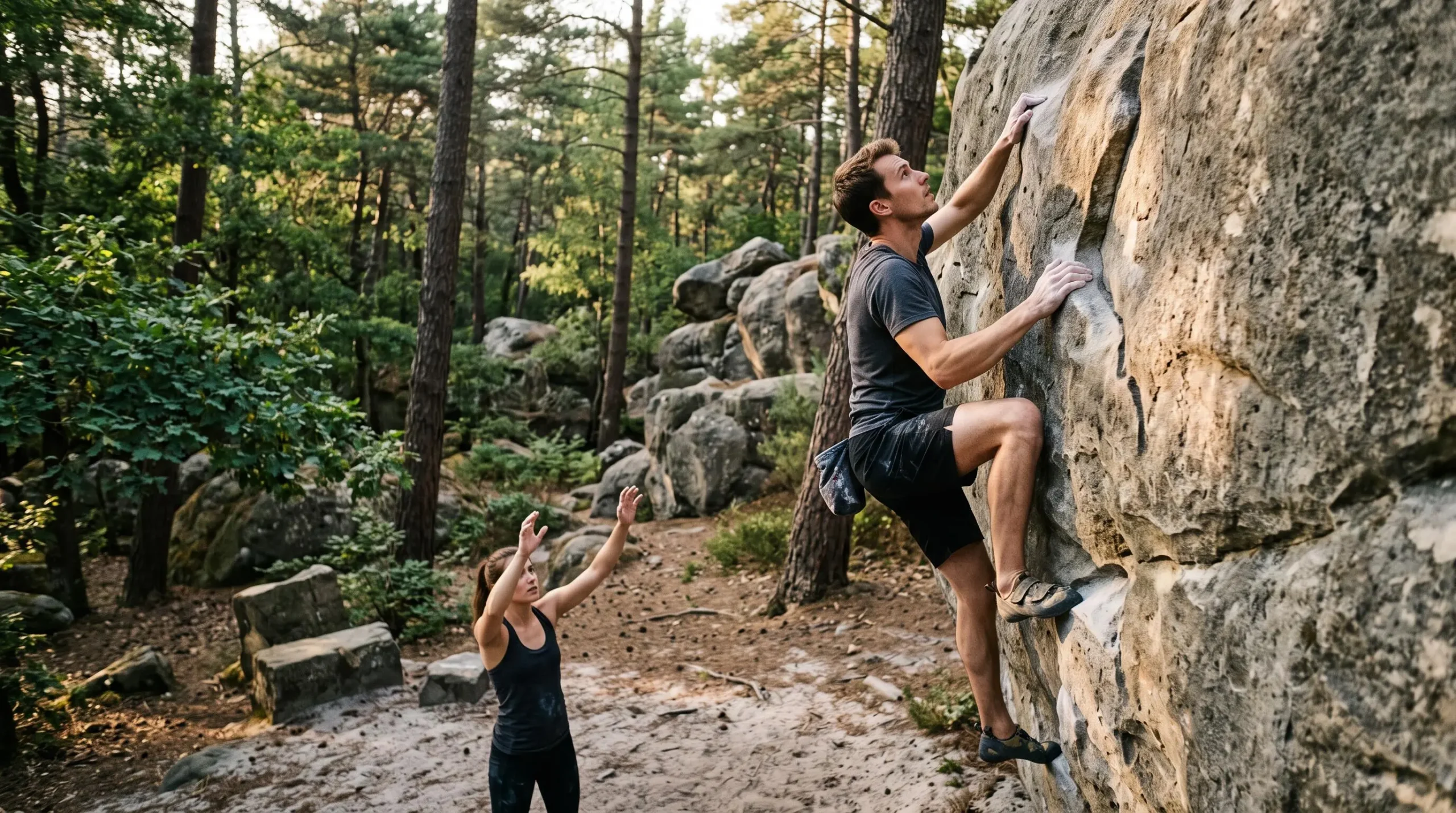
Wake early, return to the forest and dedicate the morning to bouldering if you brought climbing shoes and a crash pad. Official climbing areas carry green ONF signs marking the Convention zones; sectors such as Bas Cuvier, Elephant and 95.2 rank among the most accessible for intermediate boulderers. If hiking suits you better, the Sentier Denecourt-Colinet network offers longer loops that link viewpoints, rock formations and shaded groves.
After lunch, drive to the town of Fontainebleau and visit the Château de Fontainebleau. The palace opens most days, though hours vary seasonally; check the official site before you go. Allow two hours for the main apartments, gallery and gardens. Return to the van by late afternoon, choose your second overnight location and prepare dinner. If the weather cooperates, an evening walk along the forest fringe offers soft light and fewer crowds.
Day 3: Villages of Seine-et-Marne and Return to CDG
Use the final morning to explore nearby villages. Barbizon, a short drive northwest of the forest, carries a reputation as an artists’ colony; its quiet streets and nineteenth-century studios make a gentle cultural counterpoint to two days of outdoor exertion. Moret-sur-Loing, further east, offers medieval ramparts and a picturesque riverfront if you have time for a longer detour.
Depart for the airport by early afternoon, allowing two hours for the return drive, vehicle cleaning and handover formalities. Fuel the van before you arrive at the rental depot—most agreements require a full tank—and perform a final check for personal belongings tucked into cupboards or bed compartments. Complete the return inspection, hand over the keys and proceed to your terminal with the forest still visible in your rearview thoughts.
Can You Sleep in a Campervan Near Fontainebleau?
Direct answer: Wild camping with a tent or campervan is prohibited throughout the Fontainebleau Forest and its car parks, with fines of up to €1,500. Overnight parking in forest car parks is banned between 10 p.m. and 6 a.m.
The overnight question causes more confusion than any other aspect of campervan travel in France, because local rules vary and enforcement can be unpredictable. In Fontainebleau, the regulation is clear: the ONF forbids sleeping in vehicles on forest land or in forest parking areas overnight. According to the Fontainebleau Forest overnight and climbing rules compiled from ONF and FFME official guidelines, fines for wild camping can reach 1,500 €, and rangers do patrol popular car parks after dark.
Three designated bivouac sites around the forest allow tent-only stays for one night, with a maximum of twenty tents per site. Campervans are currently tolerated in the car parks serving these bivouac areas, though this status remains informal and may change. These sites offer no facilities—no water, no toilets, no electricity—so you rely entirely on your van’s onboard systems.
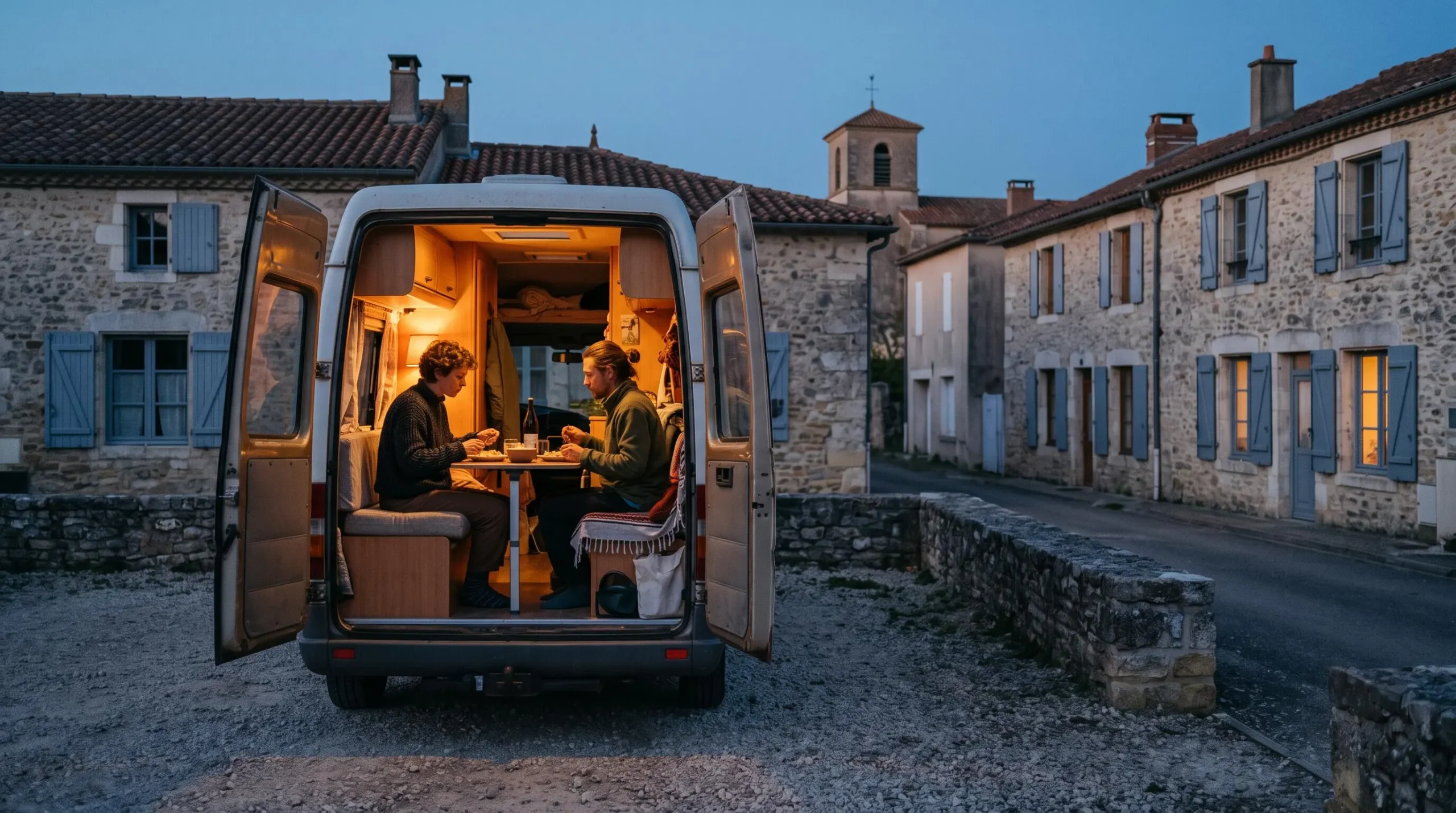
The safer, simpler alternative is a registered campsite. Several campgrounds operate within a short drive of the forest, offering marked pitches, sanitary blocks and legal certainty. Rates vary by season and amenities, but a basic pitch typically costs less than a budget hotel room and delivers the same outdoor access. Some villages in Seine-et-Marne also provide aires de camping-car—dedicated overnight areas for motorhomes—that permit a single night’s stay, sometimes free, sometimes for a small fee.
Enforcement matters: ONF rangers and local police do issue fines for illegal overnight parking. Ignorance of the regulation offers no protection, and the cost of a penalty far exceeds a campsite pitch. Always confirm the status of your chosen spot before settling in for the night.
Practical Tips to Make Your First Campervan Trip a Success
Driving a campervan for the first time feels less daunting once you master a few basics. Most rental vans measure under three meters tall and around two meters wide—larger than a car, smaller than a removal lorry. Approach height barriers cautiously, give yourself extra space when changing lanes and remember that your rear overhang extends further than you think when reversing. After the first hour, the dimensions become intuitive.
Budget planning for three days requires adding several cost layers: van rental, fuel, tolls, overnight fees, food and entry tickets. Rental rates fluctuate by season, vehicle size and booking lead time, so securing your reservation early typically delivers better pricing. Fuel consumption averages higher than a sedan due to weight and aerodynamics; expect around 25 to 30 miles per gallon depending on driving style. Tolls on the A6 remain modest for a short trip. Campsite or aire fees range widely, but budgeting €15 to €25 per night covers most basic options. Cooking meals in the van saves money compared to restaurants, though picking up fresh bread and cheese from a local market enhances the experience without straining the budget.
Seasonality shapes your trip more than you might anticipate. Spring (April to early June) and autumn (September to October) deliver mild temperatures, stable weather and fewer crowds on the bouldering circuits. Summer brings warmth and long daylight hours but also peak visitor numbers, busy campsites and occasionally oppressive heat inside the van. Winter offers solitude and crisp forest air, though shorter days compress your activity window and some facilities close. For bouldering, cooler months provide better friction on the sandstone, making autumn the preferred season among climbers.
Equip yourself sensibly: hiking boots or trail shoes, layered clothing for variable weather, a headlamp for evening tasks around the van, a refillable water bottle and basic first-aid supplies. If you plan to boulder, bring climbing shoes, a chalk bag and a crash pad; rental options exist in Fontainebleau town but booking ahead improves availability. A portable phone charger, offline maps and a small cooler for perishable food round out the essentials. Everything else—camp chairs, portable speakers, elaborate cookware—adds comfort but not necessity.
When you feel ready to book, confirm your travel dates, choose a van that matches your group size, verify pick-up and drop-off procedures and double-check the current forest access status before departure. A well-planned three-day loop from Paris-CDG to Fontainebleau proves that limited time need not limit ambition—only logistics, and those you now control.
How long does it take to drive from Paris-CDG to the Forest of Fontainebleau?
The drive covers approximately 51 miles (82 kilometers) and typically takes between one hour and one hour thirty minutes, depending on traffic conditions around Paris and the time of day you travel.
Can you wild camp in a campervan near Fontainebleau?
No. Wild camping with a tent or campervan is prohibited in the forest and on forest car parks, with fines up to €1,500. Overnight parking in forest car parks is banned between 10 p.m. and 6 a.m. Use registered campsites or designated aires instead.
Is driving a campervan difficult for beginners?
Most travelers adapt within the first hour. Campervans are larger than cars but built on standard commercial chassis. Drive cautiously at first, watch for height barriers, allow extra space for lane changes and practice reversing in an empty car park before joining highway traffic.
What is the best season to visit Fontainebleau in a campervan?
Spring (April to early June) and autumn (September to October) offer mild weather, fewer crowds and better friction on the sandstone for bouldering. Summer brings warmth and long days but more visitors; winter delivers solitude but shorter daylight hours.
Do I need to book a campsite in advance around Fontainebleau?
Booking ahead is recommended during summer weekends and public holidays when campgrounds fill quickly. Outside peak season, you can often find pitches without a reservation, but advance booking eliminates uncertainty after a day of hiking.