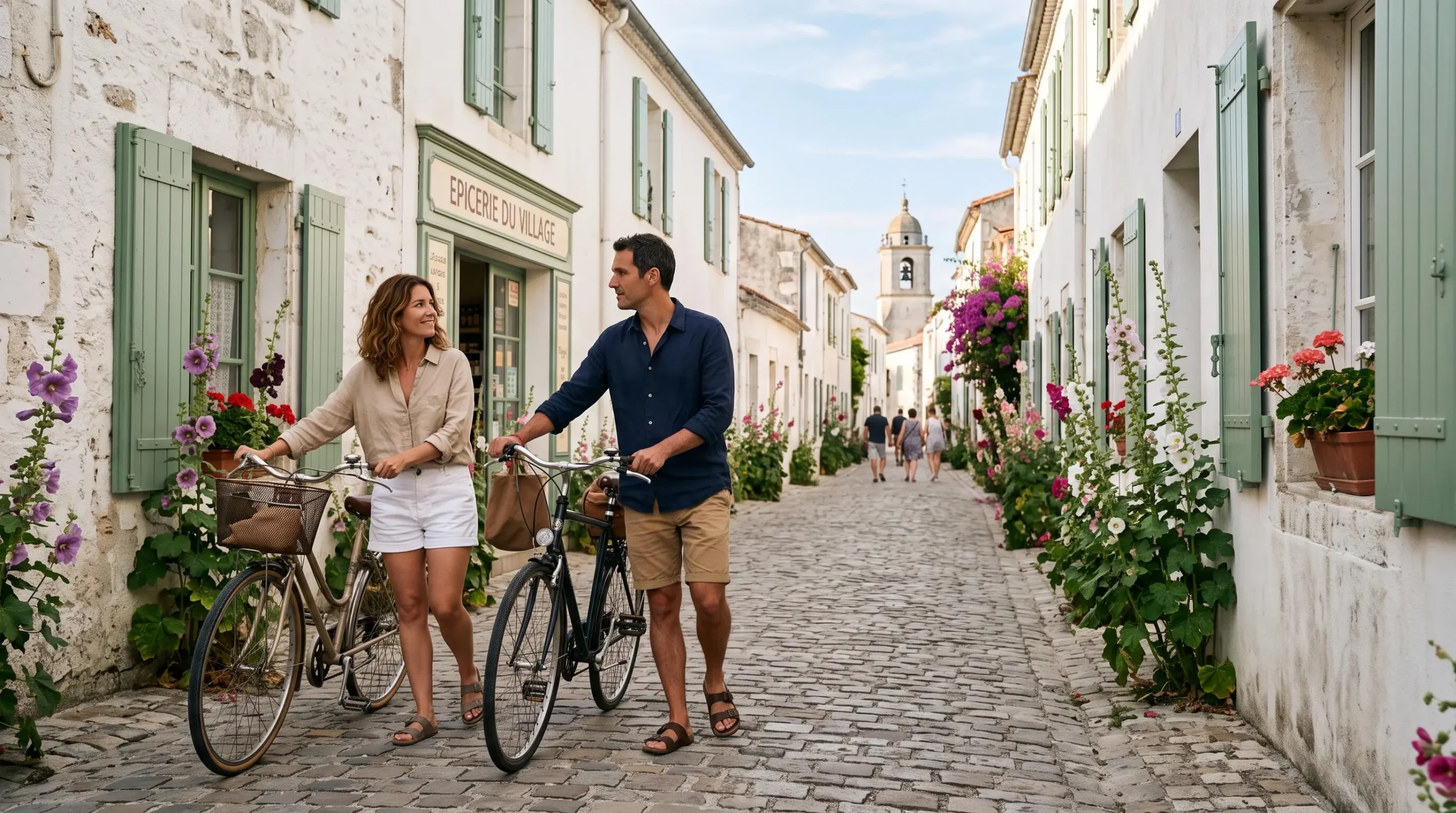
Planning a car-free holiday on the Île de Ré means choosing a village location before choosing a villa. The island’s ten villages share the same whitewashed architecture and green shutters, yet their atmospheres, accessibility and seasonal rhythms differ in ways that determine whether a cycling-only stay feels effortless or frustrating. With weekly villa rental prices starting from around €1,890 according to available catalogues, and no fallback option to drive to the next village for supplies or beach access, the initial location decision carries more weight than the property itself.
This article compares the island’s main villages according to verifiable criteria: proximity to cycle paths, walking distance to shops and markets, beach access, and suitability for families, couples or groups. The goal is to provide a decision framework that matches traveller profile, season and priorities to the right village, using official data from the Île de Ré tourist office and local authorities rather than subjective rankings.
Where should you stay on the Île de Ré without a car?
A car-free stay on the Île de Ré succeeds when three conditions align: the village sits within easy cycling distance of daily necessities, the cycle path network connects reliably to beaches and neighbouring villages, and the local atmosphere matches the traveller’s expectations for animation or calm. According to Destination Île de Ré, the island’s official tourist office, 138 kilometres of cycle paths link all major villages, making bicycle travel structurally viable across the island.
The island divides roughly into three zones. The eastern approach, from Rivedoux-Plage through La Couarde-sur-Mer to Saint-Martin-de-Ré, offers shorter distances to the mainland and denser commercial infrastructure. The central band, including La Flotte and Ars-en-Ré, balances harbour charm with relative calm. The western tip, from Les Portes-en-Ré to Saint-Clément-des-Baleines, delivers the quietest beaches and the most exposed cycling routes. Each zone requires a different tolerance for wind, distance and seasonal crowds.
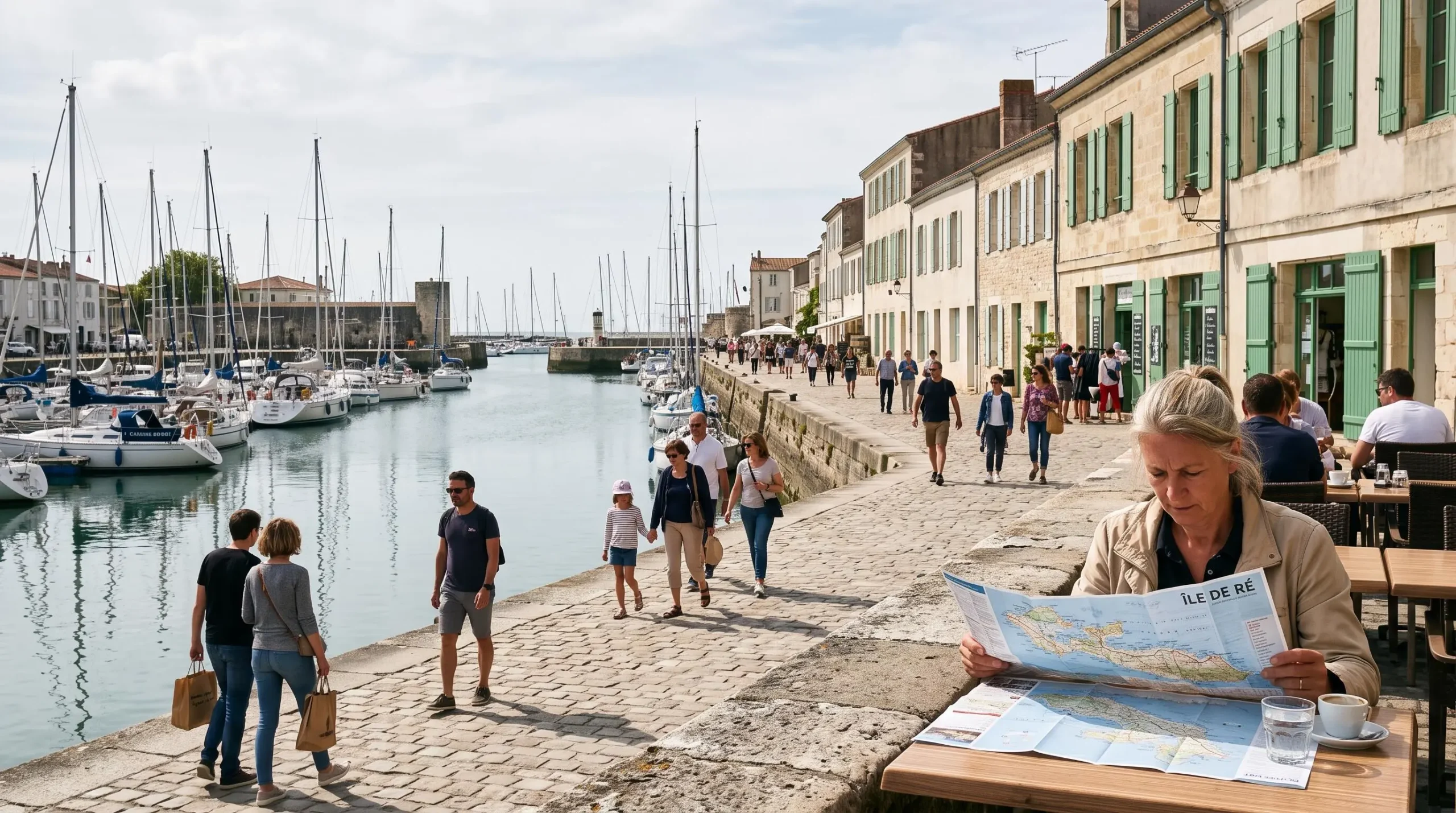
Seasonality reshapes these zones significantly. Saint-Martin-de-Ré maintains year-round services but draws peak crowds in July and August. Quieter villages such as Saint-Clément-des-Baleines offer authentic calm in May or September but may see reduced opening hours for shops and restaurants outside high season. A family prioritising beach proximity and daily markets will arbitrate differently from a couple seeking off-season tranquillity with walking-distance access to a weekly shop and bakery.
Before filtering villa listings, establish clear priorities: proximity to a daily market, a specific beach, or simply a village centre where essentials sit within a five-minute walk. These criteria, rather than villa features alone, determine whether cycling remains a pleasure or becomes a daily logistical challenge.
Saint-Martin-de-Ré, La Flotte and Ars-en-Ré: which village suits your stay?
Saint-Martin-de-Ré functions as the island’s commercial and administrative centre. The fortified harbour, listed as a UNESCO World Heritage site, anchors a compact old town with year-round shops, restaurants and a daily market in summer. The village suits travellers who value animated streets, evening dining options and the ability to complete all errands on foot. Families with young children benefit from the concentration of services, though parking scarcity and pedestrian density peak in July and August. Saint-Martin sits roughly equidistant from the island’s beaches, requiring a bicycle ride of fifteen to thirty minutes depending on the chosen shore.
La Flotte offers a middle ground: a working harbour with a renowned market, quieter streets than Saint-Martin, and a village centre where bakeries, grocers and restaurants cluster within walking distance. The location suits couples or families seeking a blend of authenticity and convenience. La Flotte’s position on the northern coast provides shorter access to calmer beaches, though the southern ocean beaches require a longer cycle. The village maintains a community feel while offering sufficient infrastructure for a car-free stay, particularly outside peak weeks.
Ars-en-Ré trades commercial density for harbour charm and a slower pace. The village’s distinctive black-and-white church tower and narrow streets attract visitors seeking postcard aesthetics, but daily services are sparser. A car-free stay in Ars works well for experienced cyclists comfortable with longer rides to larger markets or varied beaches. The village suits couples prioritising atmosphere over immediate convenience, and benefits from its western position for sunset views and access to the island’s wildest coastal stretches.
Further east, Rivedoux-Plage serves as the gateway village, immediately after the bridge. Its long sandy beach and family-friendly facilities make it practical for households with children, though the village lacks the architectural charm of Saint-Martin or Ars. La Couarde-sur-Mer sits between Rivedoux and Saint-Martin, offering direct beach access, a more residential character, and shorter cycling distances to the island’s eastern attractions. Both villages work well for beach-focused stays where daily cycling to Saint-Martin or La Flotte for markets and dining remains manageable.
The western villages, Les Portes-en-Ré and Saint-Clément-des-Baleines, deliver maximum tranquillity and proximity to the island’s lighthouse and nature reserves. These locations suit experienced cycling households or couples seeking isolation, provided they accept longer rides to larger shops and are comfortable with limited evening dining options. Stays here succeed best outside July and August, when the western route’s exposure to wind becomes less critical and when calm itself becomes the primary draw.
Specialist villa rental platforms covering the island typically list properties across all major villages. ce lien provides access to high-end rentals filtered by village, capacity and weekly pricing, allowing direct comparison of what each location offers within a defined budget.
- Families with young children seeking convenience and beaches:
Rivedoux-Plage or La Couarde-sur-Mer, for short beach access and manageable distances to Saint-Martin’s services.
- Couples prioritising atmosphere, markets and dining within walking distance:
La Flotte or Saint-Martin-de-Ré, depending on tolerance for crowds in high season.
- Experienced cycling families seeking charm and calm, comfortable with longer rides:
Ars-en-Ré or La Flotte, balancing village character with access to varied beaches.
- Couples seeking maximum tranquillity and nature, off-season or willing to cycle daily for supplies:
Les Portes-en-Ré or Saint-Clément-des-Baleines, accepting reduced services in exchange for isolation.
Getting around the Île de Ré by bike
The feasibility of a car-free stay rests on the island’s cycle path network. According to the Communauté de Communes de l’Île de Ré, the local authority managing the network, the island offers 138 kilometres of dedicated, signposted cycle routes. These paths run separately from road traffic for most of their length, connecting all villages and reaching the majority of beaches, markets and points of interest.
The network’s flat terrain and separation from motor vehicles make cycling accessible to families with children and less experienced riders. Distances between villages remain modest: Saint-Martin-de-Ré to La Flotte measures roughly four kilometres, manageable in fifteen to twenty minutes at a relaxed pace. Rivedoux-Plage to Saint-Martin covers approximately eight kilometres, achievable in thirty minutes. The full east-west traverse, from Rivedoux to Saint-Clément-des-Baleines, spans roughly thirty kilometres, representing a two-hour ride that most families would split across multiple days rather than attempt as a daily commute.
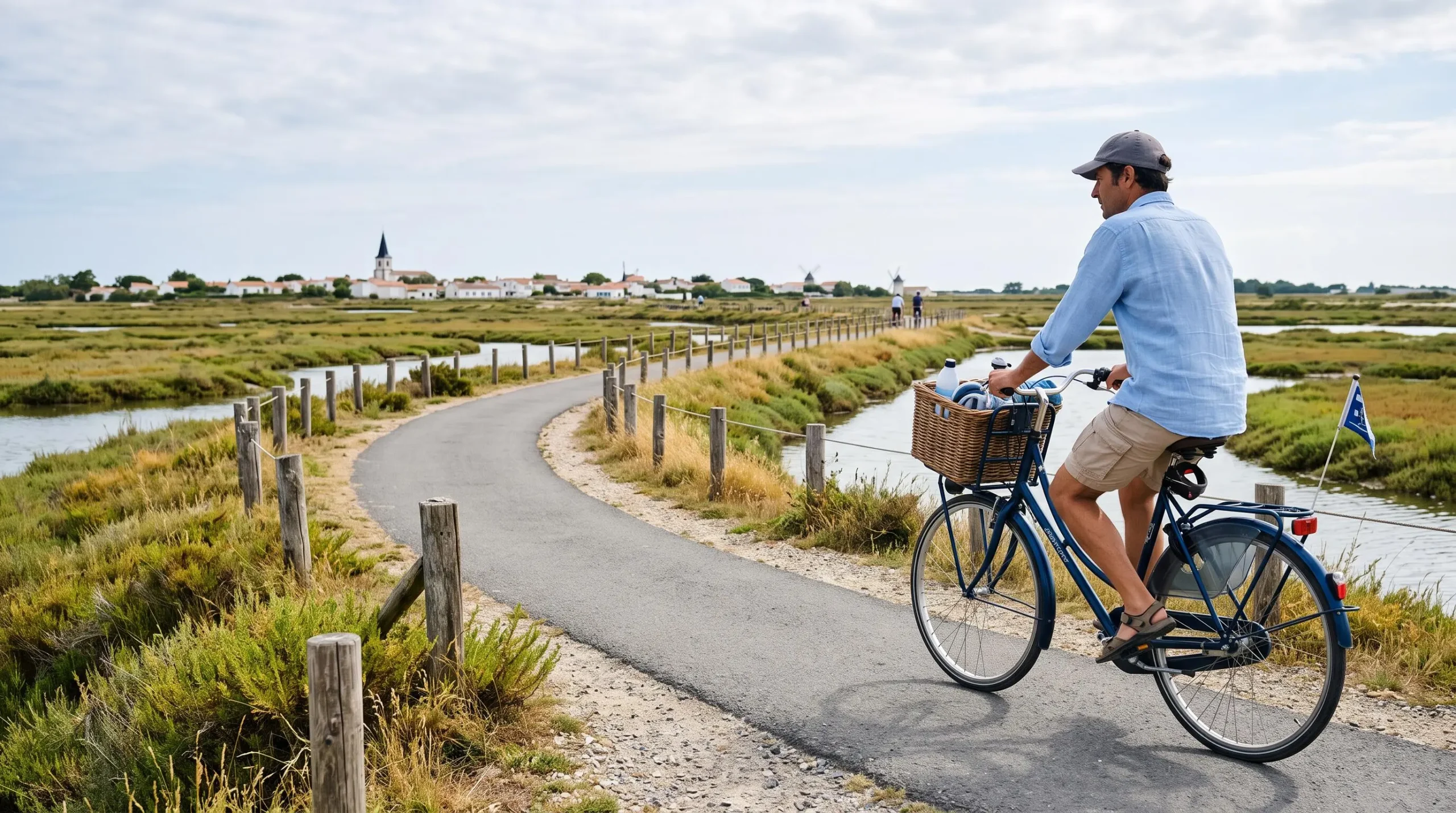
For visitors arriving without bicycles, the island supports a well-established rental market. Most villages host at least one cycle hire shop, with rates typically calculated by the day or week. Booking ahead in July and August secures availability and sometimes reduces rates. Electric-assist bicycles, increasingly common in rental fleets, extend range for older travellers or those carrying luggage or small children, though they command higher daily fees.
Public transport complements cycling for longer trips or poor weather. The official tourist office confirms that bus route 150 operates year-round between La Rochelle and Les Portes-en-Ré, serving most island villages. A free electric shuttle runs between villages from March to September, though schedules and routes vary by season. These options provide fallback mobility without requiring a car, though cycle paths remain the primary means of moving freely around the island on a daily basis.
Weather and wind influence cycling comfort. The island’s Atlantic exposure means westerly winds can slow progress, particularly on the return leg of a westward ride. Planning beach trips and errands according to wind direction, rather than attempting to fight headwinds unnecessarily, improves the experience. Morning markets and bakery runs typically occur before wind strengthens in the afternoon, a rhythm that car-free travellers naturally adopt.
Finding a luxury villa for a car-free holiday
Selecting a villa for a car-free stay requires verifying several practical details beyond standard amenities. The property’s position relative to the village centre and the nearest cycle path determines whether daily errands remain convenient or become a burden. A villa located a kilometre outside the village core on an unsurfaced lane may deliver privacy and views but adds logistical friction when bread, fresh fish or a forgotten ingredient requires a trip. Filtering search results to show only properties within the village or within five hundred metres of the main cycle path network reduces this risk.
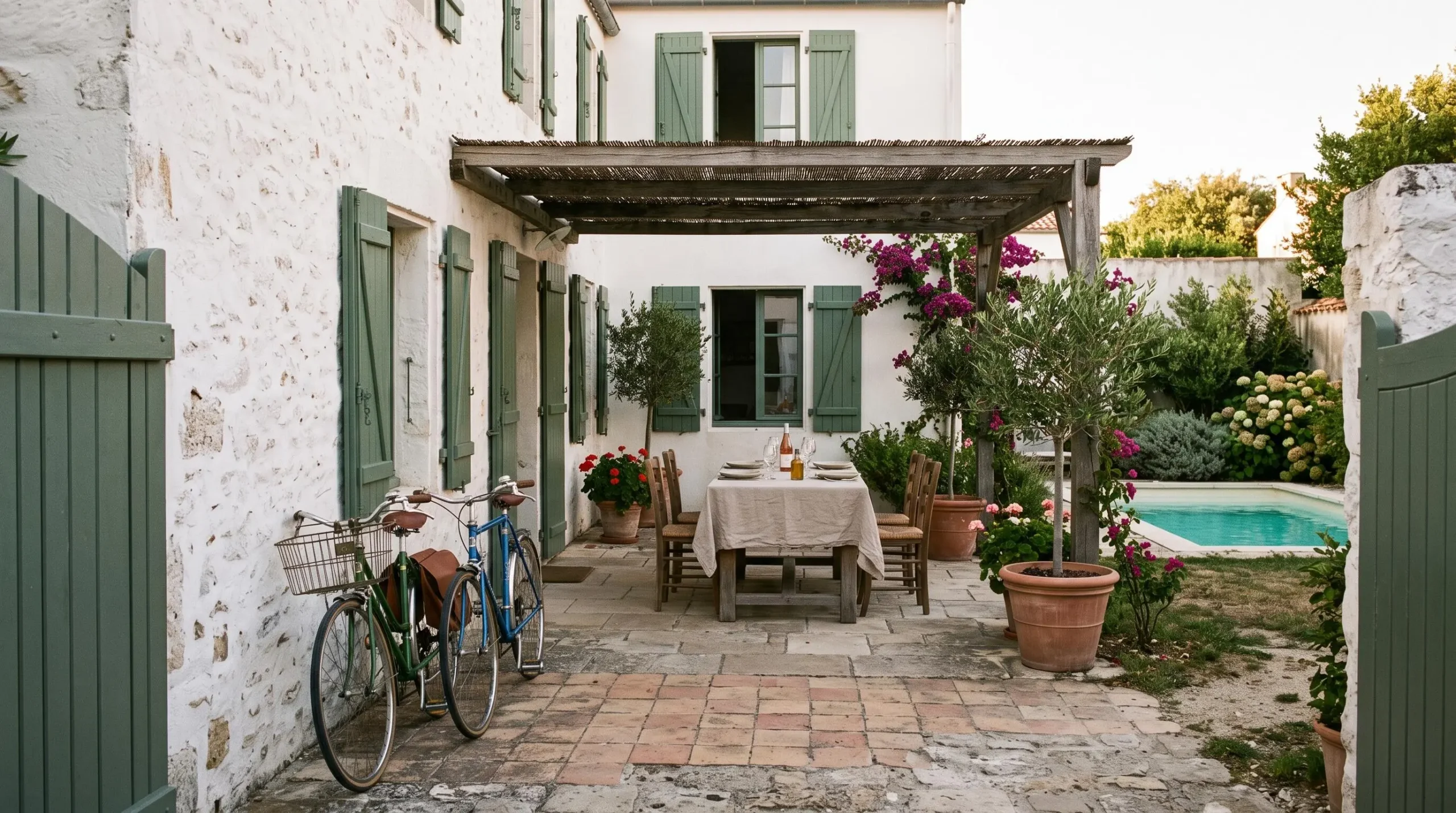
Capacity declarations deserve scrutiny. A property listed for eight guests should clarify whether that assumes children sharing beds or requires eight separate sleeping spaces. Families travelling with teenagers or multiple couples benefit from confirming bedroom and bathroom counts before committing to a booking, particularly when high weekly rates—from around €1,890 according to available catalogues—make errors costly.
Guest reviews provide the most reliable verification of bicycle storage, outdoor shower facilities for rinsing off beach sand, and proximity claims. Reviews mentioning specific distances to the village market or ease of reaching the beach by bike confirm that marketing descriptions match reality. Properties with consistently positive feedback on these practical points reduce the risk of discovering logistical problems after arrival, when alternative accommodation may not be available at short notice.
Price transparency varies by platform. Weekly rates should include specified services such as linen, cleaning and utilities, with any additional charges clearly listed. High-season premiums apply in July and August, while shoulder months—May, June and September—often deliver better value without sacrificing weather or cycling conditions. Booking several months ahead secures preferred properties and sometimes unlocks early-reservation discounts, though cancellation terms require careful reading given the financial commitment involved.
For travellers arriving from further afield, such as those visiting Paris before heading west, coordinating train schedules to La Rochelle and onward shuttle or cycle-path transfer to the island requires planning but eliminates the need to rent a car for the entire holiday. The Département de la Charente-Maritime confirms that crossing the bridge to the island on foot or by bicycle is free, using dedicated paths, and that a free shuttle operates from La Rochelle to Rivedoux-Plage from April to October, providing a car-free arrival option that sets the tone for the entire stay.
Checklist before booking a villa
- Confirm the property’s distance to the village centre and main cycle paths
- Verify bedroom and bathroom counts against guest capacity claims
- Read recent guest reviews for confirmation of bicycle storage and beach access
- Check that weekly rates include linen, cleaning and utilities, with no hidden supplements
- Compare high-season and shoulder-month pricing to identify better-value travel windows
Platforms specialising in high-end island properties typically filter by village, price range and amenities, streamlining the search process. Resources focused on cycling stays may also offer tailored listings, though cross-checking availability and pricing across multiple sources remains advisable.
Frequently asked questions
Which season is best for a car-free holiday on the Île de Ré?
May, June and September offer the best balance of weather, cycling conditions and reduced crowds. July and August deliver guaranteed sunshine and full animation but bring peak prices, crowded cycle paths and advance booking requirements. April and October suit experienced cyclists comfortable with variable weather and reduced restaurant opening hours, though the island’s sheltered eastern villages remain accessible and pleasant.
Which village is most suitable for families with young children?
Rivedoux-Plage and La Couarde-sur-Mer offer direct beach access, shorter cycling distances to essential services, and a less demanding terrain for families with young riders or trailers. Both villages maintain sufficient bakeries, grocers and pharmacies within walking distance, reducing the need for daily bicycle trips while preserving car-free mobility.
Do I need to book bicycle hire in advance?
Advance booking is strongly recommended in July and August, when demand for bicycles, child seats and trailers exceeds supply. Booking by email or phone before arrival often secures better daily or weekly rates and guarantees availability of specific models, such as electric-assist bikes or tandem options. Outside peak season, same-day hire remains generally available, though choice may be limited.
How long should I plan to stay on the Île de Ré without a car?
One week allows time to explore multiple villages, beaches and markets at a cycling pace without feeling rushed. Two weeks suit families or couples seeking a slower rhythm, with time for rest days, longer coastal rides and repeat visits to favourite spots. Weekend or short breaks work for experienced cyclists targeting a single village, though the island’s appeal lies in covering its varied geography over several days.
Can I reach the island from La Rochelle without a car?
Yes. La Rochelle’s railway station connects to most major French cities. From the station, bus route 150 runs year-round to Les Portes-en-Ré, serving all main island villages. From April to October, a free shuttle also operates between La Rochelle and Rivedoux-Plage. Alternatively, the cycle path from La Rochelle across the bridge to Rivedoux takes roughly one hour, allowing fit travellers to begin their car-free stay immediately upon arrival.
Choosing the right village before selecting a villa transforms a car-free Île de Ré holiday from a logistical puzzle into a natural rhythm of cycling, markets and beaches. Match the village to your profile, season and priorities, verify practical villa details, and the island’s 138 kilometres of cycle paths deliver the freedom that defines a successful stay without ever needing a car.