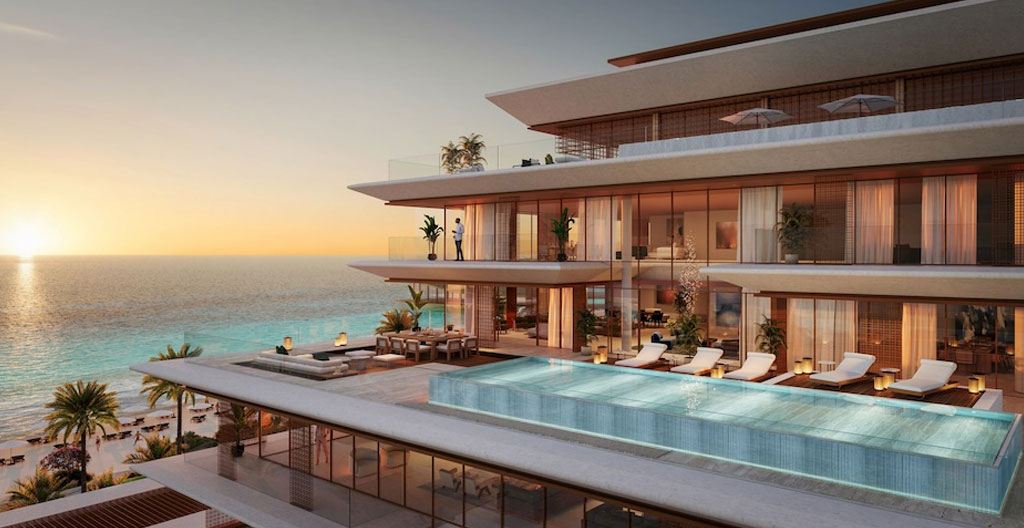
Abu Dhabi’s penthouse market occupies a category entirely its own. Where other premium properties compete on square footage or location, the capital’s top-floor residences are evaluated against a different set of criteria: unobstructed views of mangroves and the Arabian Gulf, private lift access, bespoke interior specifications, and the kind of building-wide infrastructure that transforms everyday living. Prices range from approximately AED 3 million for curated high-floor apartments to AED 25 million and beyond for genuinely exclusive crown units, depending on island positioning, floor height, and fit-out standard.
What sets an Abu Dhabi penthouse apart from standard luxury apartments
Luxury real estate United Arab Emirates agencies operating in this segment routinely distinguish between properties where the penthouse designation is architectural — a genuinely distinct structural product — and those where it is essentially a marketing label applied to any apartment above the 30th floor. The distinction between a high-floor luxury apartment and a true penthouse is sharper in Abu Dhabi than in most comparable cities. A penthouse here typically occupies a dedicated top floor or double-height crown level, with structural modifications that standard units beneath it simply do not share: reinforced terracing capable of supporting plunge pools or landscaped gardens, bespoke ceiling heights that can reach six metres in signature towers, and independent mechanical systems that isolate the residence from communal building operations.
Finishes in this segment follow a different procurement process entirely. While a premium apartment might feature marble imported from Carrara and branded kitchen appliances, the defining penthouses in Saadiyat Island or Al Reem often work with the buyer or a retained interior architect to specify custom millwork, private wine-room conditioning, and automation systems embedded during the build phase rather than retrofitted. This level of integration is physically difficult to replicate later, which is why the price differential between a comparable regular floor unit and the crown penthouse in the same tower can exceed 40%.
8%
Projected annual growth rate for the global luxury travel and property sector through 2030, per WTTC forecasts (the WTTC Global Luxury Travel Outlook)
The global context matters here. According to the WTTC Global Luxury Travel Outlook, the luxury property and travel sector is projected to grow at 8% annually through 2030, reaching a combined valuation of USD 1.2 trillion. Abu Dhabi’s strategic positioning as a destination combining cultural capital with fiscal neutrality places its premium residential market squarely inside this trajectory.
The neighbourhoods commanding the highest penthouse values
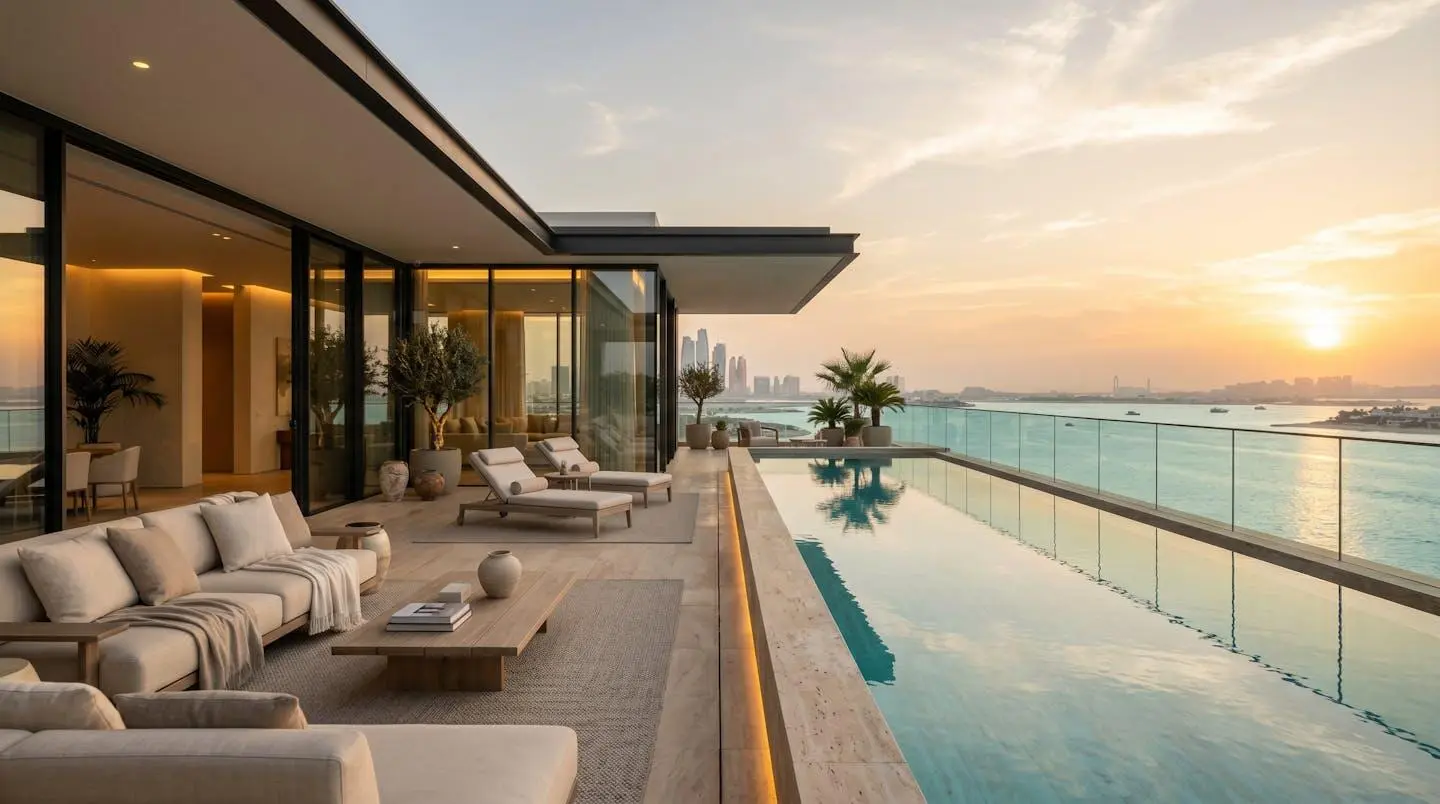
Location stratification in Abu Dhabi is more pronounced than in Dubai, partly because the capital developed along a tighter island grid, and partly because different zones carry distinct residential identities. Understanding which districts actually deliver on prestige — and which simply carry the price without the underlying credentials — is where most out-of-market buyers face their steepest learning curve.
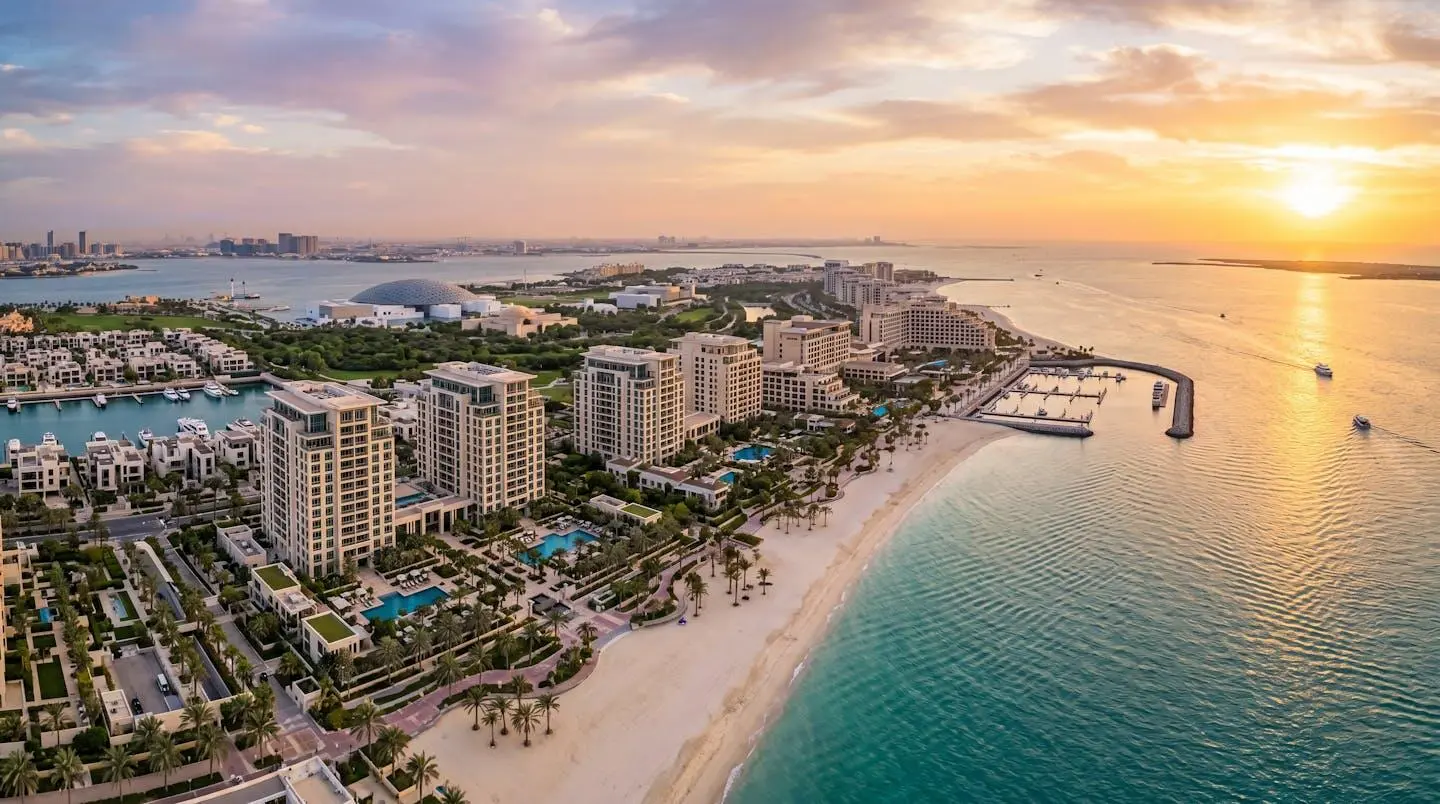
Saadiyat Island represents the clearest premium positioning. Its cultural district, anchored by the Louvre Abu Dhabi and the forthcoming Guggenheim, creates a long-term institutional halo that protects values in ways that purely residential developments cannot. Penthouses here sell against a narrative of civilisational permanence that resonates strongly with international buyers from Europe and Asia.
Al Reem Island functions as a denser, more urban alternative. Its towers deliver genuine Gulf views, and several buildings there have been designed with double-floor penthouses from inception rather than as afterthoughts. The price-to-specification ratio can represent stronger value here than on Saadiyat, though the land premium and cultural associations are correspondingly lower.
Yas Island attracts a different buyer profile, typically one motivated by proximity to Yas Marina Circuit, Ferrari World, and entertainment infrastructure. The investment rationale is partly yield-driven — short-term rental demand from Formula One weekends and major events has historically supported occupancy — but the resale market for penthouses here is narrower in terms of end-user depth.
The following comparison reflects the broad positioning of Abu Dhabi’s principal penthouse districts, drawing on market observations from established agencies active in the UAE.
| District | Price range (AED) | Buyer profile | Resale depth |
|---|---|---|---|
| Saadiyat Island | AED 8M – 25M+ | International end-users | Strong |
| Al Reem Island | AED 3M – 12M | GCC and expat professionals | Moderate |
| Yas Island | AED 4M – 15M | Investor-occupier mix | Selective |
Ownership costs beyond the headline price
One of the more persistent gaps between marketed price and actual cost of ownership in Abu Dhabi’s penthouse segment relates to service charges. Crown units — by definition the largest and most specification-heavy residences in any tower — carry service charge liabilities that can be multiples of a standard floor unit’s obligation in the same building. Charges in fully-serviced towers with concierge, valet, gym, and pool infrastructure are typically calculated on a per-square-foot basis, meaning a 6,000 sq ft penthouse will face proportionately amplified annual fees.
Service charge transparency is an area where due diligence proves essential before signing a sales agreement. Abu Dhabi’s real estate regulatory environment requires registered buildings to disclose their annual service charge budgets through official channels, but the forecasts embedded in off-plan contracts can diverge significantly from the operational reality once a building reaches full occupancy. Buyers who work with advisors experienced in the Abu Dhabi market — rather than relying on off-plan literature alone — tend to access more accurate forward estimates.
Consider the following scenario: an international buyer acquires a penthouse on Saadiyat Island at AED 18 million, attracted by the headline specification and the cultural district positioning. The service charge, at approximately AED 25–30 per square foot annually for a 5,500 sq ft unit, represents an ongoing liability in the region of AED 137,000–165,000 per year — a figure that rarely appears prominently in initial listing materials. Adding to this a four-year fit-out amortisation for bespoke finishes completed post-handover, and the true five-year cost of ownership looks materially different from the acquisition price alone.
Non-GCC nationals buying freehold property in designated Abu Dhabi zones — a category that covers the majority of premium penthouse addresses — also need to budget for the UAE Golden Visa processing pathway if residency is part of the motivation, as property investment thresholds and documentation requirements carry their own costs and timelines. Seeking legal counsel specific to the UAE framework before committing to a purchase remains the standard practice advised across the industry.
Your acquisition priorities before making an offer
Translating intent into a sound acquisition requires a structured approach, particularly for buyers entering the Abu Dhabi market without prior regional experience. The checklist below reflects the sequencing that experienced buyers and their advisors typically follow in this segment.
- Verify freehold eligibility for the specific plot — not all premium buildings in Abu Dhabi sit on freehold-designated land
- Request the audited owners’ association service charge statement for the last completed financial year
- Confirm title deed registration through the Abu Dhabi Department of Municipalities and Transport (DMT)
- Assess whether the penthouse designation reflects genuine structural differentiation or a marketing classification
- Map long-term planning activity around the chosen district to gauge future view corridor protection
The Dubai market offers a useful comparative reference point. According to data from the Dubai Chamber of Commerce Tourism Report, Dubai welcomed 16.5 million visitors in 2025 — a figure that reflects the sustained international appetite for Gulf-region premium real estate and hospitality. Abu Dhabi’s residential market, though smaller in transactional volume, draws from the same international pool of high-net-worth buyers, many of whom are diversifying across both emirates simultaneously.
Understanding what vues panoramiques des penthouses de luxe genuinely contribute to a property’s long-term value — particularly in a market where new supply continues to enter at the top end — remains one of the more nuanced judgements a buyer must make. Views that are protected by water or designated public land hold their premium more durably than those contingent on the absence of adjacent future construction.
The question worth sitting with before committing capital is not whether Abu Dhabi penthouses represent genuine value at their current pricing — the structural scarcity of genuinely differentiated crown units in established freehold zones suggests they do — but rather which specific building, floor, and orientation within that category aligns with your intended holding period and lifestyle use case.
Can non-UAE nationals buy penthouses in Abu Dhabi freehold?
Yes, in designated investment zones including Saadiyat Island, Al Reem Island, and Yas Island. Freehold ownership rights for non-GCC nationals are restricted to these defined areas under Abu Dhabi’s property law framework. Title deed registration is managed through the Abu Dhabi Department of Municipalities and Transport.
What is the typical service charge for a luxury Abu Dhabi penthouse?
Service charges vary by building and location but typically run between AED 20 and AED 35 per square foot annually in fully serviced towers. For a penthouse of 4,000–6,000 sq ft, this represents an annual obligation of approximately AED 80,000–210,000 depending on the specific building’s facilities and management structure.
How does Abu Dhabi’s penthouse market compare to Dubai at similar price points?
Abu Dhabi tends to offer larger floor plates and more genuinely differentiated crown units at equivalent AED price points, partly because the market is smaller and development density is lower. Dubai’s premium penthouse segment is more liquid and transactionally active, which supports both entry and exit, but also means more supply competing for the same buyer pool.
The penthouse market in Abu Dhabi rewards buyers who treat the acquisition as a structured decision rather than an aspirational impulse. Specification depth, service charge accountability, view corridor durability, and title security are the four axes that consistently separate transactions that hold value from those that underperform against expectation.